Blog
Vasyl Stus - The poet who died before the Nobel could find him
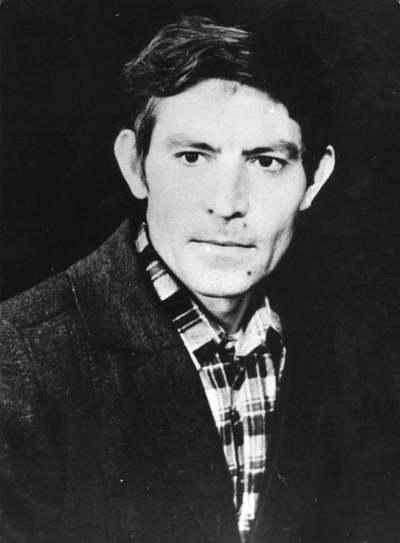
On 4 September 1985, a man died in a Soviet punishment camp in the Ural mountains. He was 47. His name was Vasyl Stus, and almost nobody outside Ukraine had heard of him. His books were banned. His name could not be spoken publicly in his own country. The Soviet state had spent two decades trying to make him disappear.
That same year, an international committee of scholars, writers, and poets had nominated him for the 1986 Nobel Prize in Literature. He died before the nomination could be formalised — before the Swedish Academy had the chance to consider his name at all. The Ukrainian diaspora in Toronto had been racing to complete the paperwork. They did not make it in time.
This is the story of who he was, what he wrote, and why a state decided he was dangerous enough to destroy.
The country he was born into
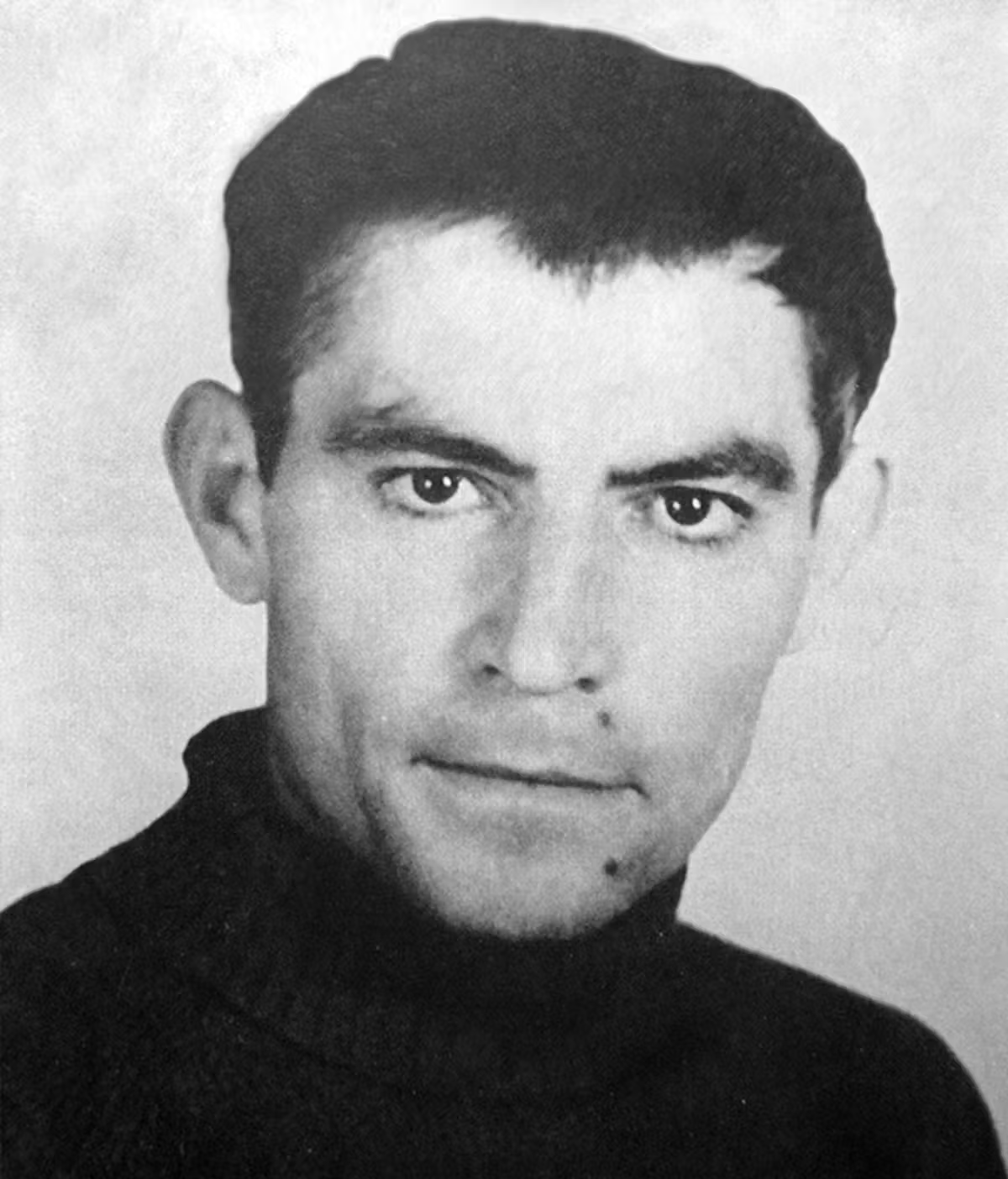
To understand Vasyl Stus, you have to understand what Ukraine was in 1938, and what it had just been through.
Only five years before his birth, Ukraine had endured the Holodomor — a deliberately engineered famine, organised by Stalin, that killed somewhere between three and seven million people. Families in villages like Vasyl's had watched their neighbours starve. The grain had been taken. The borders had been sealed. The dying had been systematic and intentional, and afterwards the Soviet state had pretended it hadn't happened at all.
And then, in the very years Vasyl was learning to walk and speak, another catastrophe was unfolding. The generation of Ukrainian writers, poets, painters and thinkers who had flourished in the 1920s — the extraordinary flowering of culture known as the Executed Renaissance — was being swept away. Arrested, shot, worked to death in camps. More than two hundred significant cultural figures, gone in a decade. By the time Vasyl came of age, Ukrainian literature had been scraped clean of everything dangerous and alive, replaced with obedient, patriotic verse that praised Soviet achievements and asked no difficult questions.
His family moved to Stalino (now Donetsk) when he was a child, and he studied history and literature there at the Pedagogical Institute, graduating with honours in 1959. He later moved to Kyiv to pursue graduate studies at the Shevchenko Institute of Literature of the Ukrainian Academy of Sciences.
He was gifted, rigorously intellectual, and drawn to the European literary tradition — particularly German Romanticism and the poetry of Rainer Maria Rilke, whose influence would mark his work throughout his life.
He began writing seriously in his twenties, and his early poems had a lyrical intensity that set them apart from the flat, obedient verse that Soviet cultural policy preferred.
The Sixtiers
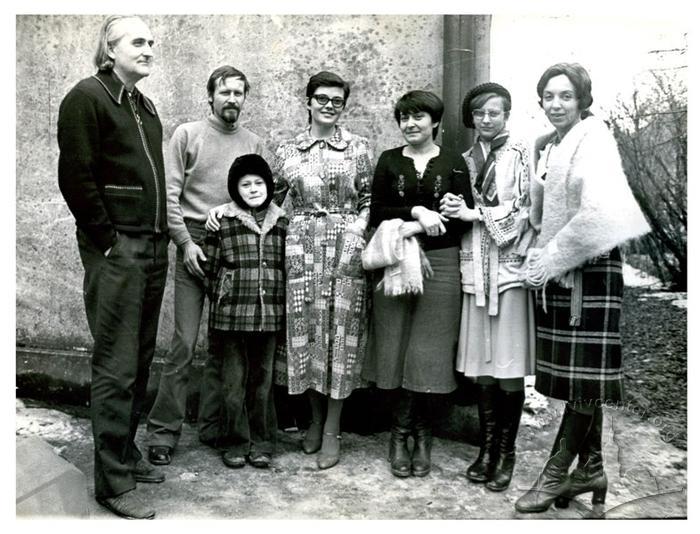
Khrushchev's denunciation of Stalin's crimes a few years earlier had created a narrow window of possibility, and a generation of young Ukrainians was rushing through it. They were poets, artists, filmmakers, critics — and they had an urgent, almost desperate hunger to reclaim what had been taken.
They wanted to write in Ukrainian, in a Ukrainian that was rich and alive and connected to the literary tradition that had been so violently interrupted. The Soviet state, which understood perfectly well that language and identity are inseparable, found this intolerable.
The crackdown came in 1965. KGB agents arrested dozens of Ukrainian intellectuals in a sweep that became known as the "first wave" of Ukrainian political repression under Brezhnev.
Stus was not arrested in that round, but on 4 September 1965 he was present at the premiere of Sergei Parajanov's film Shadows of Forgotten Ancestors at Kyiv's Ukrayina cinema. During the screening, Ivan Dziuba took the stage to protest the arrests of Ukrainian intellectuals. When the KGB switched on sirens to drown him out, Stus stood up and called on the audience to rise in protest. It was a small act of public resistance — but in the Soviet context, it was significant enough to end his academic career. He was expelled from his graduate program and lost his job at the State Historical Archive.
The first arrest
On 12 January 1972, they came for Stus.
The charge was "anti-Soviet agitation and propaganda" — a phrase applied to almost anyone the state found inconvenient. What it meant in Vasyl's case was: he had written poems that told the truth, and he had let other people read them. He was sentenced to five years in a labour camp in the Mordovian ASSR, followed by two years of exile in Magadan Oblast — the frozen far east of the Soviet empire.
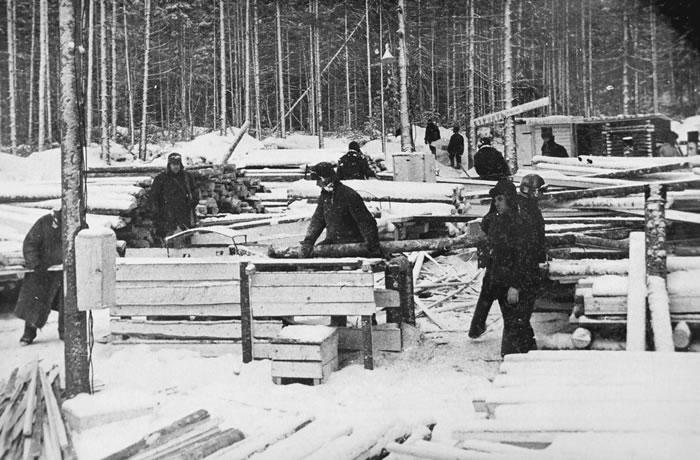
In the camps, he refused to recant, refused to sign loyalty statements, refused to denounce his friends. He went on hunger strikes in protest at the treatment of other prisoners. He argued with camp administrators as though he were the prosecutor at their trial and they were the criminals. And he wrote.
He wrote constantly. Poems composed in secret, memorised, smuggled out in letters to his wife Valentyna and his young son Dmytro — letters that were ofte intercepted, often never delivered, but sometimes, miraculously, got through.
Entire manuscripts were confiscated and destroyed by camp authorities.
The KGB systematically dismantled his archive, volume by volume.
What survived is a fraction of a life's work, preserved by the devotion of people who loved him.
The second sentence
He was released in 1979 and came back to Kyiv. He joined the Ukrainian Helsinki Group — a network of activists monitoring Soviet human rights abuses — and went on writing and speaking, refusing to be quiet. He had perhaps eighteen months of something resembling a normal life.
In May 1980, they arrested him again.
This time the sentence was ten years in a strict-regime camp, followed by five years of exile. He was to be sent to Perm-36, in the Ural mountains — one of the harshest facilities in the Soviet system, reserved for those the state had classified as "particularly dangerous criminals."
At his trial, Vasyl tried to dismiss his state-appointed lawyer. The court refused. That lawyer was a twenty-six-year-old named Viktor Medvedchuk, who stood before the court and told them that all of his client's crimes deserved punishment. Vasyl conducted his own defence. He lost, of course. He had known he would lose. He had written about this.
Medvedchuk, it is worth knowing, went on to become one of Vladimir Putin's closest allies in Ukraine. Putin is the godfather of his daughter. In 2022, as Russian missiles fell on Ukrainian cities, Medvedchuk was arrested for treason. History has its own accounting.
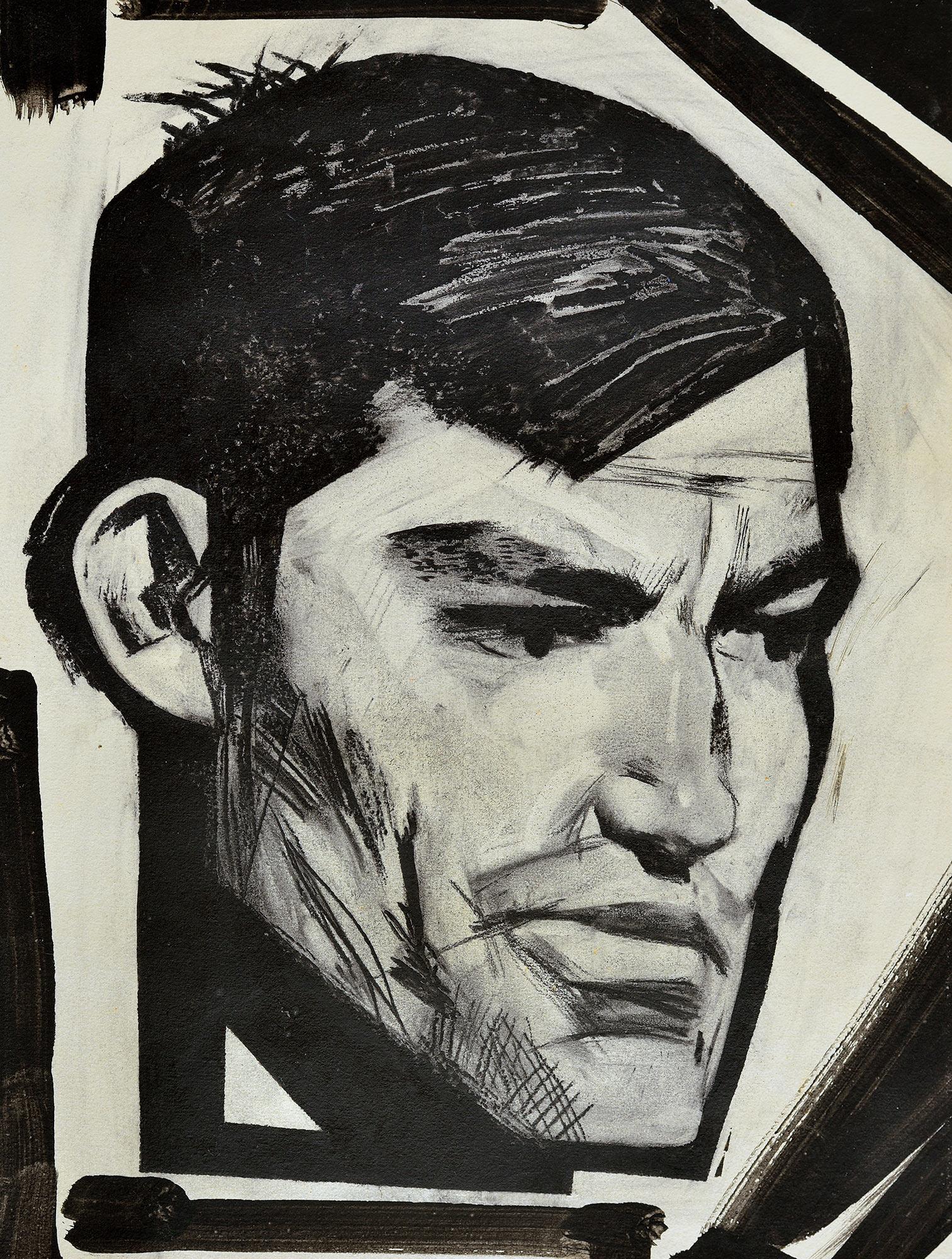
What he wrote
None of this would matter in quite the same way if Stus had not been, first and last, an extraordinary poet.
His work is difficult to translate — as is most great poetry — because so much of it depends on the specific weight and sound of Ukrainian, a language that carries within it the entire history of a people who spent centuries being told their language was not real, was merely a dialect, was not worth speaking. For Stus, writing in Ukrainian was itself an act of resistance, not because he chose to make it one but because the state had made it so.
His late poems, written in the camps, have a compressed, almost crystalline quality. They deal with time, with memory, with the experience of being enclosed — physically, politically, spiritually — and with the persistence of an inner life that no system of confinement can fully reach. They are not poems of despair. They are, in a way that is hard to explain without reading them, poems of defiant endurance.
His magnum opus, Palimpsesty (Palimpsests), written during his years of imprisonment and published posthumously in 1986, is widely regarded as one of the pinnacles of 20th-century Ukrainian literature. The title captures something essential about his method: new truths layered over erased ones, meaning reclaimed from silence.
The Nobel question
In 1985, an international committee of scholars, writers, and poets formally nominated him for the 1986 Nobel Prize in Literature. Separately, the Ukrainian diaspora in Toronto was working to submit his candidacy but could not complete the nomination in time. He died on 4 September 1985, before any of it could be formalised. The Swedish Academy never had the opportunity to consider him.
There is no documented evidence that he appeared on any official shortlist. The Nobel committee's deliberations are sealed for fifty years. What we know is that PEN International and human rights organisations across Europe had been campaigning loudly on his behalf, that his work was circulating in literary circles in the West, and that the machinery of Soviet repression, in killing him when it did, removed from the world a writer of genuine and rare quality at the moment when the world was beginning to notice he was there.
What came after
In August 1990, the Soviet Supreme Court cancelled Stus's verdict and closed his case due to lack of evidence. His books — the ones that survived — were published. His name could be spoken again.
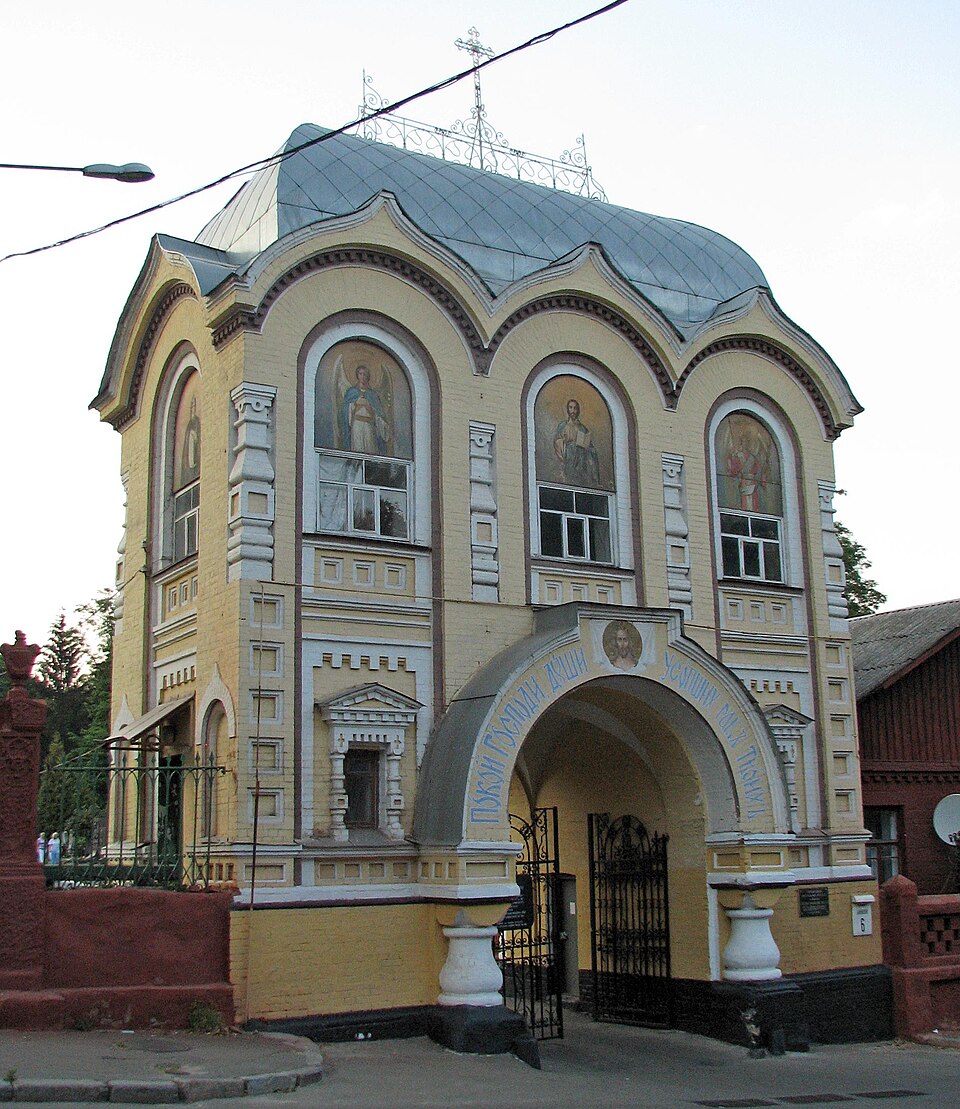
In November 1989, his remains were exhumed from a camp cemetery and reburied in Kyiv, at Baikove Cemetery. More than 30,000 people attended. In 2005, he was posthumously awarded the title Hero of Ukraine.
In the decades since, he has become something close to a national symbol in Ukraine: the poet who refused, the writer who chose integrity over survival, the man the Soviet state could not break even as it killed him.
Since Russia's full-scale invasion of Ukraine in February 2022, his image has appeared on murals in Kyiv and other Ukrainian cities. His poems have been read at funerals and shared online. A new generation has encountered him not as a figure from the past but as a voice that speaks directly to a present in which Ukraine is again defending its right to exist as itself — in its own language, with its own history, on its own terms.
This is, in the end, what the Soviet state feared most about a poet like Vasyl Stus: not that he would organize a revolution, but that his words would last. That people would still be reading them when the state that imprisoned him was gone.
They were right to be afraid.
Gallery
No items found.